
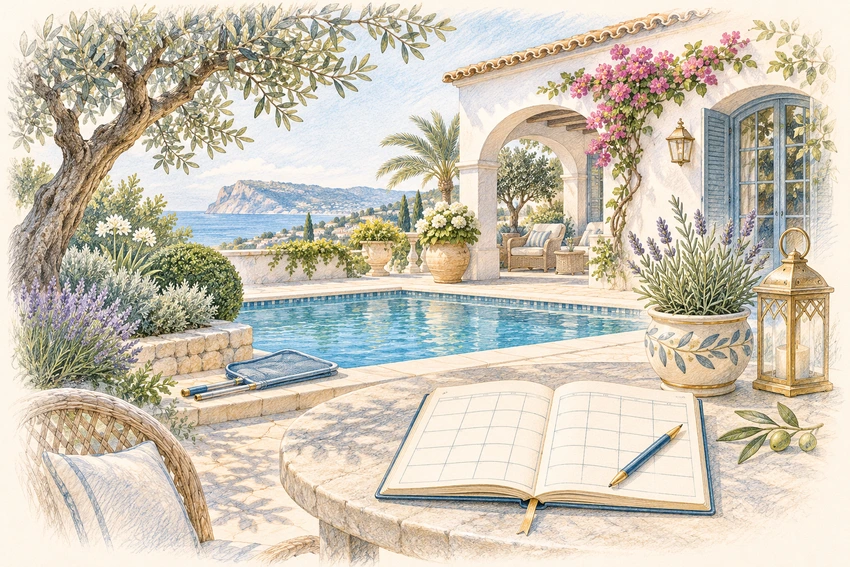
A well-maintained villa is not necessarily one that receives the most interventions. It is one whose checks are planned at the right time.
Use this annual framework as a starting point, adapting it to the house, exposure, equipment and occupancy.
All year: the regular checks
Some checks are not seasonal:
- access and the general condition of the property;
- pool and filtration;
- signs of leaks, unusual smells and damp;
- visual checks of the garden and irrigation;
- equipment that needs to remain powered;
- a report after significant weather events.
Agree frequency according to identified risks, absence periods and recent work, with the relevant professionals.
January to March: winter checks
Winter can be a useful period for more substantial maintenance:
- inspect façades, seals, terraces and drainage;
- look for damp and water ingress;
- check heating, hot water and ventilation;
- schedule pruning appropriate to each plant;
- check blinds, shutters and outdoor furniture.
It is also a good time to plan work that should be finished before the main season.
April to June: preparing for summer
Before hot weather:
- service and test air conditioning;
- check insect screens and shading;
- adjust irrigation;
- check the pool and equipment;
- prepare terraces and outdoor furniture;
- arrange thorough cleaning.
Discovering an air-conditioning problem in April is easier to manage than finding it on the first day of a July holiday.
July to September: following intensive use
Heat, swimming and arrivals increase demand:
- pay closer attention to pool water;
- monitor consumption and possible leaks;
- observe plants and irrigation;
- clean accessible filters according to instructions and watch condensate drainage;
- check equipment that is used heavily.
Where the villa is rented, prompt follow-up of reports and small repairs helps prevent a backlog.
October to December: preparing for rain and absence
After summer:
- clear gutters, grilles and drains safely;
- store or secure lightweight furniture;
- have roofs, terraces and waterproofing checked where necessary;
- adjust irrigation;
- review outstanding repairs;
- prepare for any extended closure.
Mediterranean rainfall can be brief but intense. Clear drainage matters, while work at height must be left to properly equipped professionals.
Pool: look beyond the colour of the water
Follow-up includes water balance, filtration, level, unusual noises, leaks and worn parts. Keep a record of interventions and replacements so equipment wear can be anticipated.
Garden: work with the seasons
The schedule depends on species and exposure. It should cover pruning, irrigation, any fertilisation, green waste, pests and tree or palm safety.
Ask contractors to report unusual findings, not only complete the usual task.
Air conditioning: service before you need it
Preventive servicing can include cleaning, condensate drainage checks, testing units and investigating unusual sounds or smells. Technical or refrigerant work belongs to qualified specialists.
Clear usage instructions and reasonable settings also help protect equipment.
Keep the schedule in one place
A simple record can contain:
- equipment;
- agreed frequency;
- previous visit;
- next due date;
- contractor;
- abnormal findings;
- quote or invoice;
- useful photograph.
This history helps prevent omissions and makes a handover to a different contractor easier.
Adapt the approach to the house
A generic calendar is only a starting point. A villa near the sea, exposed to wind or surrounded by a large garden differs from a compact home.
From January 2027, Souvenir de Voyage will organise agreed follow-up around the property and its owners’ routines. The first step is to identify its equipment and priorities.
Seasonal maintenance at a glance
| When | Priorities | Intended outcome |
|---|---|---|
| Each visit | Access, leaks, pool, irrigation, ventilation, visible abnormalities | Documented findings |
| January–March | Waterproofing, drainage, damp, quotes and larger works | Planned interventions |
| April–June | Air conditioning, pool, shading, terrace and cleaning | Preparation for summer stays |
| July–September | Water, irrigation and heavily used equipment | Timely follow-up and property care |
| October–December | Rainwater drainage, professional roof checks, furniture and closure | Reduced risk during absences |
These are planning guidelines, not statutory servicing intervals. Electrical, refrigeration and pool-equipment work should be entrusted to suitably qualified professionals where necessary.
What to do after heavy rain or strong wind in Jávea
A targeted visit can check access, signs of water on ceilings or around windows, drainage grilles, terraces, shading and exposed equipment.
Photograph findings, record the date and seek an appropriate assessment. Cleaning a symptom is not the same as fixing its cause. Do not climb onto a roof or approach wet electrical installations without professional help.
Frequently asked questions
How often should an empty villa be checked?
There is no universal frequency. Equipment, season, insurance terms and identified risks all matter. An agreed visit schedule, supplemented after notable weather, is more useful than one rule for every villa.
Does a pool need attention outside the swimming season?
Yes, according to its operating mode and the pool specialist’s recommendations. Water, filtration and pool safety still need attention even when nobody swims.
Why keep invoices and maintenance photographs together?
They support contractor follow-up, expense comparisons and communication with an absent owner. A history can also reveal repeat failures or increasingly urgent work.
A local contact working for the owner
Good property care is not simply ordering services. It involves setting priorities, following up work, tracking costs and providing clear information.
Talk to Souvenir de Voyage about your equipment, occupancy and priorities.
Read also: annual maintenance costs and the empty-villa checklist.